Short answer: If water is coming through a light fitting, do not touch the fitting or the switch. Switch off the main switch at the consumer unit if you can reach it without standing in water. Stop the leak, or tell the flat above. Keep the power off to that circuit until an electrician has tested it.
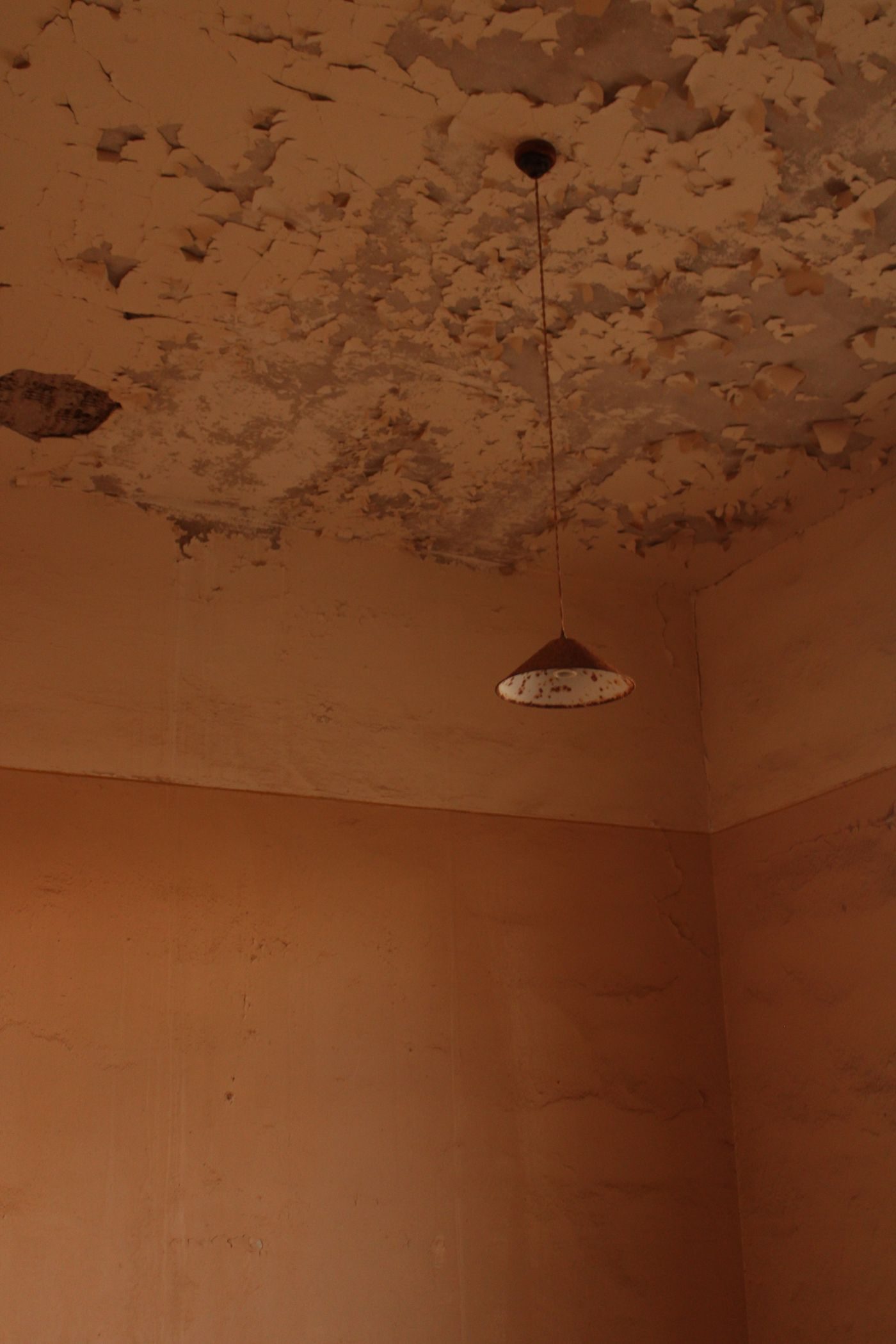
Water and electricity in the same ceiling is a fault you should never leave. The good news is that the right first steps are simple, and most of them do not need anyone with tools. This guide covers what to do in the first few minutes, how to stop the water, and what has to happen before the lights can go back on.
Our electrics after a leak or flood page explains how we test and make safe after water damage.
The first few minutes
- Keep away from the fitting. Do not touch the light, the switch, or anything metal near the drip.
- Switch off at the consumer unit. Use the main switch if you are not sure which circuit feeds the light. Only do this if you can reach the consumer unit without standing in water. If the consumer unit itself is wet, leave it and call for help.
- Catch the water. Put a bucket or bowl under the drip. Move furniture and anything plugged in away from the area.
- Stop the water at the source. If the leak is in your home, turn off the water at your stop tap. If it is from above, go up and tell your neighbour, or contact the managing agent.
- Do not push on a bulging ceiling. A ceiling holding water can come down. Keep people out of the room.
Electrical Safety First gives the same core advice for any water damage: switch off at the consumer unit only if it is safe, keep away from exposed wiring as it may still be live, and get a registered electrician if there is any sign of water inside the consumer unit or any arcing or overheating.
Why light fittings are where water shows up
Water finds the lowest point it can. In a ceiling, that is often the hole cut for a light fitting. Spotlights are the worst because each one is a hole in the plasterboard. Water from a bathroom, a radiator pipe or a roof leak runs along the joists and drops out through the first opening it finds.
That means the fitting where you see the drip may not be the only wet part. Junction boxes and cable runs above the ceiling can be soaked too.
When the electrics trip on their own
You may find the lights have already gone off by the time you notice. That is the RCD doing its job. RCD stands for residual current device. It is the switch on your consumer unit with a test button, and it trips when current leaks to earth, which water makes very likely.
Do not keep resetting it. If it trips again, it is telling you the circuit is still wet. Leave it off. Our guide on why electrics keep tripping explains what the switches on a consumer unit do.
If your home has an older fuse box with no RCD, the circuit may not switch itself off at all. That makes switching off at the main switch even more important.
What an electrician will test
Once the water has stopped, an electrician should:
- Isolate the affected circuit and confirm it is dead.
- Inspect the fittings, ceiling roses and junction boxes for water and corrosion.
- Remove damaged fittings, especially spotlights and LED drivers.
- Carry out an insulation resistance test. This measures whether current can leak out of the cables, and it is the main way to know the circuit is dry enough.
- Leave the circuit isolated if it fails, and come back once it has dried.
- Replace fittings and retest before switching it back on.
Drying can take days, especially if insulation in the ceiling is soaked. A circuit that passes on the first day may fail later if water was trapped. A careful electrician will tell you if a second visit is wise.
Wandsworth and leaks from above
Leaks through light fittings are a very London problem because so many of us live under someone else. The VOA’s housing stock figures show that 57% of London homes are flats or maisonettes. In Wandsworth the share is 72%, and 43% of all homes there were built before 1919.
That combination means a lot of Victorian terraces in Earlsfield, Southfields, Tooting and Battersea that have been split into flats. In a converted house, the bathroom of the upper flat often sits directly over the kitchen or hallway of the flat below. Pipes run under floorboards that are also the ceiling below, and the lighting cables for the lower flat sit in the same gap.
If you live in a converted flat in Wandsworth and water comes through a light, the most likely source is the bathroom or kitchen above. Our guide on a leak from the flat above reaching your electrics covers who is usually responsible.
What to tell your insurer
Take photos of the ceiling, the fitting and any water damage before anything is removed. Keep a note of the time you noticed it and what you did. Ask the electrician for a written note of what they found and tested, and any fittings they replaced. Insurers will want this, and so will a neighbour’s insurer if the leak came from their flat.
When to call straight away
Ask for help without waiting if:
- Water is on or in the consumer unit
- You can see sparking, smoke, or smell burning
- The main switch will not stay on, so you have no power at all
- Water is coming through more than one fitting, or near sockets as well
- Someone in the home relies on electrical medical equipment
You can request a visit through our leak and flood electrics service. The price is confirmed after a look at the job.
Quick questions
Can I switch the light off at the wall switch?
Avoid it. The switch may be on the same wet circuit, and water can run down inside the wall. Switch off at the consumer unit instead, using the main switch if you are not sure which circuit it is.
The leak has stopped. Can I turn the lights back on?
Not yet. Water can sit inside the fitting, the ceiling and junction boxes for days. The circuit should be insulation tested before it is used again. That test shows whether current is escaping.
The water is coming from the flat above. Whose job is it?
The flat above needs to stop the leak. Your own wiring is usually your responsibility, but the building's insurance may cover it. See our guide on leaks from the flat above.
Do I need to replace the light fitting?
Often yes for spotlights and fittings with electronic drivers, as water can damage them for good. A simple pendant may be fine once dry and tested.
Last updated 23 October 2026. Written for homes in London. Rules can change, so check the linked sources for the latest position.