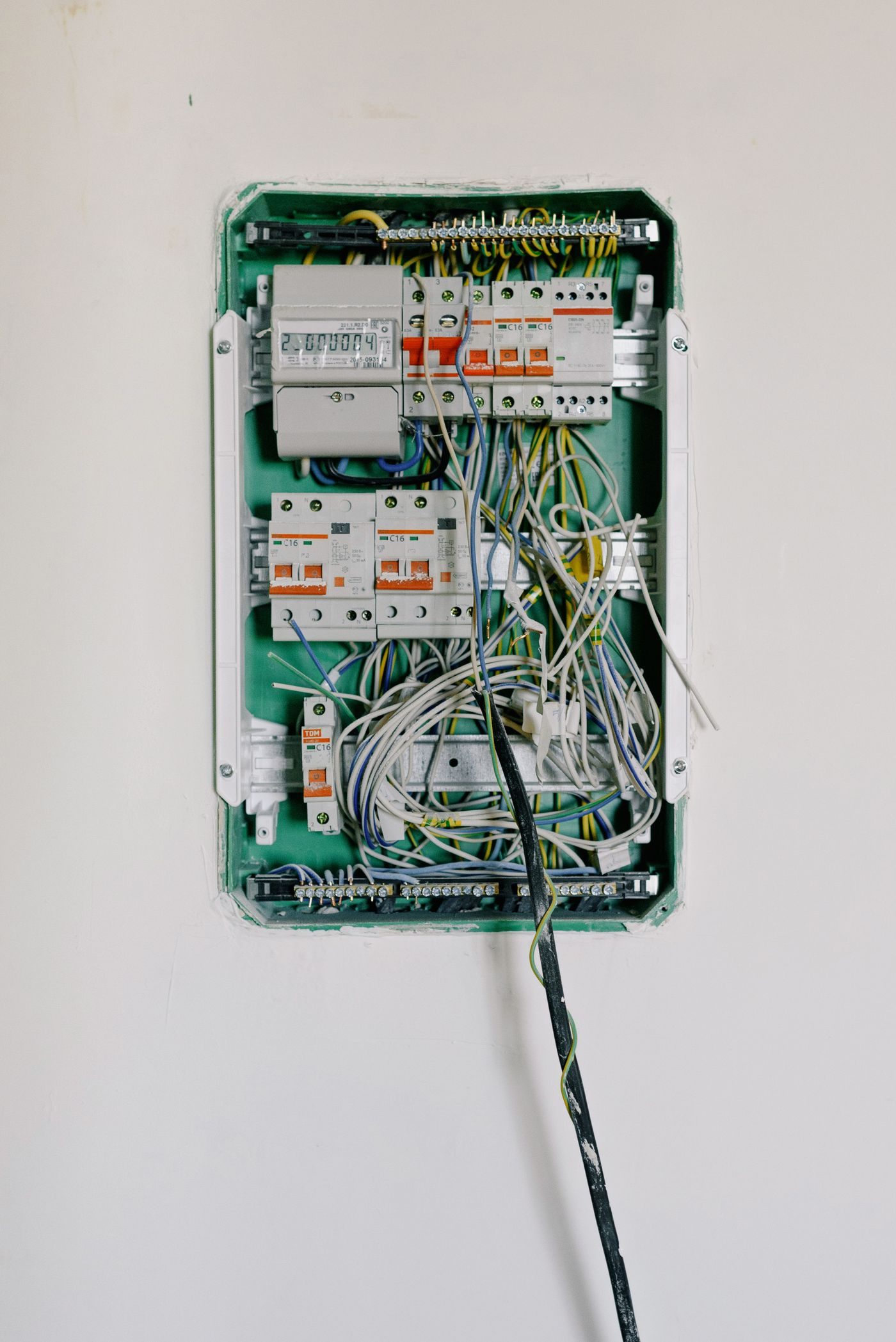
Fuse board replacement
Fuse box and consumer unit replacement in London
Replacing a fuse box or consumer unit is notifiable work under Part P in England. It should be done by an electrician registered with a competent person scheme, or notified to council building control. The circuits are tested first, because a new board with RCD protection will expose faults that an old fuse box hid.
Send the detailsFuse board replacement
Get fuse board replacement sorted
A minute to fill in. The price is confirmed after a look at the job, before any work starts.
Overview
Old wire fuses or a board that trips? A new consumer unit to the current wiring rules, tested and certified.
- 01
Your fuse box has wire fuses that you replace by hand
- 02
There is no RCD protection, or only on some circuits
- 03
The board has a wooden back, a cracked case or scorch marks
- 04
An EICR has said the board needs replacing
- 05
You are adding a shower, EV charger or new circuits
- 06
The board trips and parts are no longer made for it
The visit
What happens, step by step
Making safe comes first. You are told what was found and what the repair takes before any repair starts.
- 01
Survey and test
Existing circuits are tested before any quote is final, so faults that would trip a new board are found first.
- 02
Check the earthing and meter tails
The main earth and the cables from the meter are checked. If the supply side needs work by the network operator, you are told before the job is booked.
- 03
Fit the new board
The power is off for most of a working day. Each circuit is connected to its own protection and labelled.
- 04
Test every circuit
Every circuit is tested and the results are written up on an Electrical Installation Certificate.
- 05
Building regulations notice
Because the work is notifiable, the installer's scheme or the council issues a building regulations compliance certificate.
The rules: Part P and BS 7671
Approved Document P lists replacing a consumer unit as notifiable work in a home in England. There are two legal routes. An electrician registered with a competent person scheme can self certify the work. Otherwise the council's building control must be told before work starts, and will inspect it. The Planning Portal recommends using a registered installer. Ask to see their registration and check it on the scheme's online register.
The work itself must meet BS 7671, the wiring regulations. Since 15 October 2026 the only current version is BS 7671:2018+A4:2026, known as Amendment 4, according to NICEIC's summary. New boards in homes are fitted in a non combustible enclosure, which in practice means metal.
Why testing comes before the quote
Old fuse boxes protect against overload but cannot detect current leaking to earth. A new board with RCD protection can. In a house where cables have been added over decades, with a borrowed neutral here or a damp outside light there, the new board can start tripping on day one.
Testing the circuits first means these faults are found and priced up front. It also shows whether the earthing is good enough and whether the meter tails, the cables from the meter to the board, are big enough for the new board.
Old boards in London homes
The Valuation Office Agency counts 52% of Harrow's homes and 41% of Sutton's as built between 1919 and 1939, and 35% of Havering's from 1945 to 1972. Many of these homes were rewired in the 1960s or 70s and still have the fuse box from that rewire. Wire fuses, a wooden back board and no RCD are common signs.
In converted flats, common across Wandsworth and Hackney, the consumer unit may be squeezed into a hall cupboard by the front door with the meter in a communal cupboard downstairs. That affects how the new board is fitted and whether the meter tails need replacing.
Choosing RCBOs, RCDs and AFDDs
A split board uses two RCDs, each covering several circuits. An RCBO board gives each circuit its own protection, so one fault only knocks out one circuit. Under Amendment 4, arc fault detection devices (AFDDs) are required on socket circuits in houses in multiple occupation, high rise residential buildings over 18 metres or six storeys, care homes and student accommodation, and recommended elsewhere. The survey will explain which suits your home.
On the day: what to expect
The power to the whole home is off for most of the job, so plan for no heating controls, no fridge and no internet for the day. Freezers kept shut usually hold their temperature for some hours. If someone at home relies on powered medical equipment, say so when you book.
In a flat, the electrician may need access to the meter cupboard in the communal hall, and sometimes the managing agent has the key. If the meter tails are too small or the main fuse needs changing, the network operator may need to visit first. That is arranged through your supplier or by calling the network operator, and you are told before the job is booked.
At the end you should get an Electrical Installation Certificate with a schedule of test results for every circuit, a labelled board, and notice that the work has been registered under the building regulations. Keep these with your house papers. You will need them when you sell, and a landlord will need them alongside the next EICR. Our post on what changes the cost of a new consumer unit explains what is priced in and what is extra.
Price
How the price is worked out
Agreed with you after a look at the job, before any repair starts.
What affects the price
The price depends on the number of circuits, what testing finds, the state of the earthing and meter tails, and how easy the board position is to work in. We quote after a survey.
| What | Price |
|---|---|
| New consumer unit, fitted and certified | quote on survey |
| Repairs to faults found in testing before the work | quote on survey |
| Upgrading main earthing or bonding | quote on survey |
| RCBO or AFDD protection instead of a split board | quote on survey |
No prices are shown on this site. Every job is priced after a look at it, by photo or a visit.
Questions
Fuse board replacement: what people ask
Is replacing a fuse box notifiable?
Yes. Replacing a consumer unit is notifiable under Part P in England. It must be self certified by a registered competent person or notified to building control.
How long will I be without power?
Usually most of a working day for a typical home. Faults found during testing can add time.
Does my plastic consumer unit have to be replaced?
Not by law if it is in good condition. New boards in homes must have a non combustible enclosure, and an inspector may note an older plastic one as an improvement.
What paperwork will I get?
An Electrical Installation Certificate with the test results, and a building regulations compliance certificate from the installer's scheme or the council.
Where
Fuse board replacement across London

Fuse board replacement
Send it through and get a call back
Describe what is happening in a sentence. Leave anything that tripped switched off while you wait.
Start the safety questions