Short answer: If your fuse box has pull out carriers with fuse wire inside, it is an old rewireable fuse box with no RCD protection. It can be replaced with a modern consumer unit, but in a 1930s semi the existing circuits must be tested first. Faults hidden for years often show up as soon as RCD protection is added.
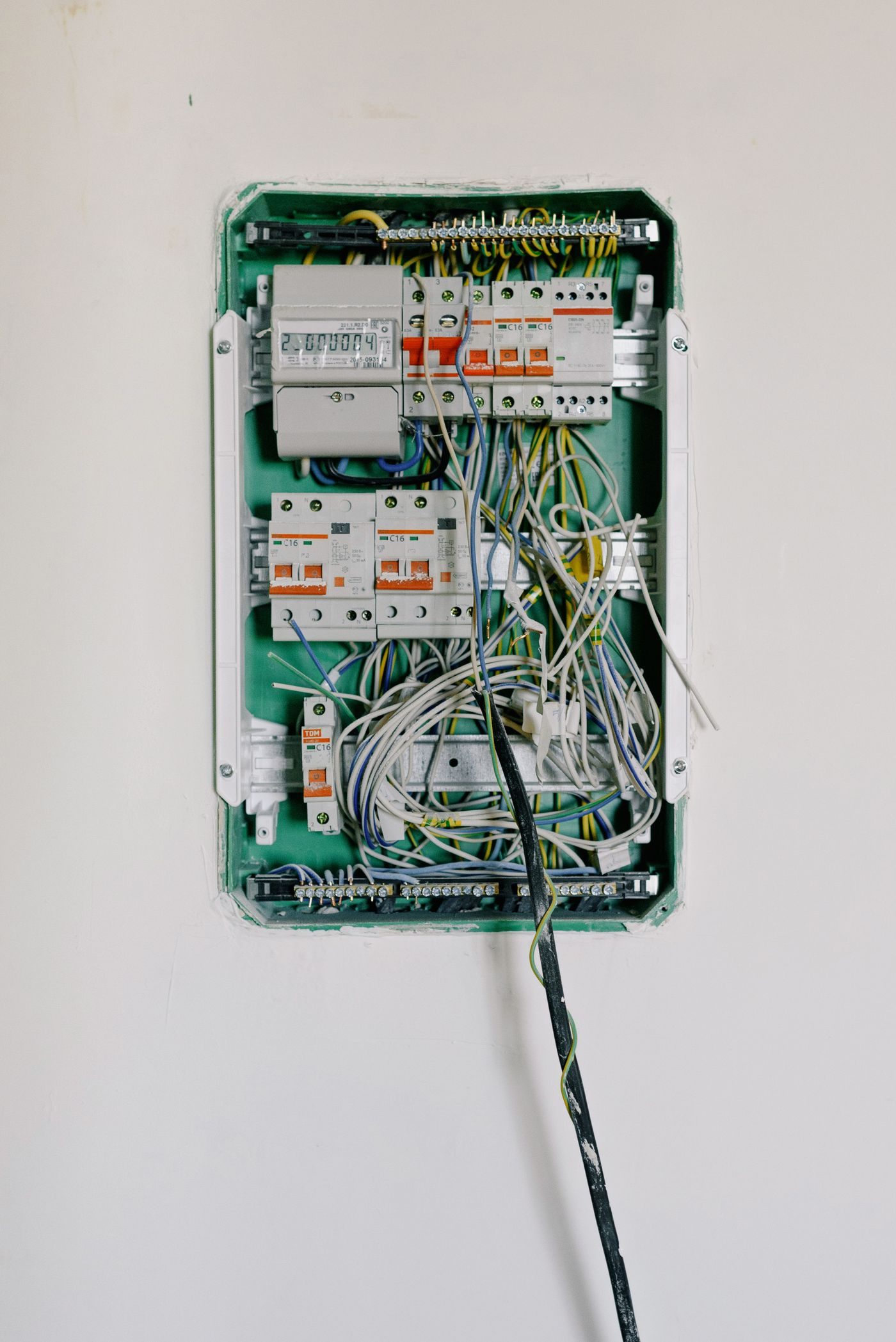
How to tell if you have an old fuse box
Open the cupboard under the stairs, or wherever your meter is, and look at the box next to it. You do not need to remove any cover to identify it.
You probably have an old rewireable fuse box if:
- there are white or brown ceramic or plastic carriers you pull out by hand
- each carrier has a thin wire running through it
- there is a card of spare fuse wire nearby
- there are no switches labelled RCD and no test button
- the box has a wooden back or a metal case with a large lever main switch
Some boxes have cartridge fuses instead of wire, or a mix of old fuses and a few newer breakers added later. Any of those without RCD protection are worth having inspected.
Never pull fuse carriers with the main switch on, and do not put fuse wire of a different size in. If you need to reset something, switch off at the main switch first.
Why 1930s semis in Harrow often still have them
Harrow is Metroland. The VOA stock of properties for 2025 shows 51.8% of homes in the borough were built between 1919 and 1939, the highest share of any of our London areas. Semis make up 30.6% of the stock. Rayners Lane, North Harrow, Kenton and Pinner are full of them.
The original 1930s wiring has almost always been replaced. Most of these houses were rewired in the 1950s, 1960s or 1970s, and plenty were done again later. The trouble is that some homes stopped at the earlier rewire. The fuse box, and sometimes the cable, can date from that time.
Electrical Safety First notes that cables coated in black rubber were phased out in the 1960s. If a house was rewired around then, part of the cable may be rubber insulated. Rubber goes hard and crumbles with age, which is a fire and shock risk. Our guide to rubber wiring shows how to spot it.
What testing finds first
Before any board change, the existing circuits are tested. Here is what usually turns up in an older semi, and what it means.
| What testing finds | What it means | What happens next |
|---|---|---|
| Low insulation readings | Cable insulation is breaking down or damp is getting in | Find the section, repair or replace before the new board |
| Shared neutrals between circuits | Two circuits use one return wire, so RCDs will trip | Separate the circuits |
| Missing earth on lighting circuits | Older lighting often had no earth wire | Metal fittings and switches must not be used until fixed |
| No main bonding to gas or water | The green and yellow clamps on the pipes are missing | Fit bonding as part of the job |
| Rubber cable in the loft or floors | Insulation at the end of its life | Those circuits need rewiring |
| Extensions on their own spurs | Later additions run off a socket | Check they are safe and suitably protected |
A shared neutral is a common one in houses where a kitchen extension was added later. Under an old fuse box it never caused trouble. Under a new board with RCDs, it trips the moment a load comes on.
What a replacement involves
- Survey and test. We look at the board, the meter position, the main earth and bonding, and test the circuits. Then you get a quote on survey that explains any faults found.
- Agree the plan. You know which devices are going in, how long the power will be off, and what any repairs will involve.
- Change the board. The power is isolated. The old board comes out and a new metal consumer unit goes in. New boards in homes have a non combustible case, which in practice means steel. See why consumer units are metal.
- Test and certify. Every circuit is tested again on the new board. You get an Electrical Installation Certificate with the results.
- Notify. Replacing a consumer unit is notifiable under Part P, as listed in Approved Document P. A registered competent person self certifies the work and you receive a Building Regulations compliance certificate. If the installer is not registered, building control at Harrow Council must be notified before work starts. Ask your electrician which scheme they are with and check it online.
The new board is designed to the current wiring standard, BS 7671:2018+A4:2026. The NICEIC explains that it became the only current version on 15 October 2026.
What sort of new board
Most families in a three bed semi are best served by RCBOs. An RCBO is a breaker and RCD in one, so a fault on one circuit only switches that circuit off. With an older style board using one or two RCDs, a single fault can take out half the house, lights included. Our post on half the house having no power explains why.
Surge protection is normally included in new boards for homes. AFDDs, which detect arcing, are recommended but not required in a house. We will talk through both.
Before the visit
- Find the main switch and know how to reach it.
- Clear the space around the meter and fuse box.
- Note any circuits you know about: loft lights, garage, garden office, electric shower.
- Tell us about any recent problems: blown fuses, flickering lights, warm sockets.
Our consumer unit replacement page explains the service. For local detail, see our page on electricians in Harrow. The price is confirmed after a look at the job.
Quick questions
Is an old fuse box dangerous?
Not automatically. It gives no protection against electric shock from current leaking to earth, which an RCD would. An inspection will tell you its condition and what it is protecting.
Can I put a thicker fuse wire in if it keeps blowing?
No. The fuse wire size is matched to the cable. Thicker wire lets the cable overheat before the fuse blows, which is a fire risk. If a fuse keeps blowing, there is a fault to find.
Does changing the fuse box mean a full rewire?
Not always. If the cables test well, a new consumer unit can go on the existing circuits. If testing finds old rubber cable or failing insulation, those circuits need replacing first.
How long will I be without power?
On a typical semi, most of a working day for the board change and testing. Any repairs found during testing can add to that.
Last updated 23 October 2026. Written for homes in London. Rules can change, so check the linked sources for the latest position.