Short answer: Since January 2016 the wiring regulations have required consumer units in homes to have a non combustible enclosure, which in practice means a steel case. The change followed fires that started inside plastic boards. It does not mean a sound plastic board has to be ripped out. An inspection may note it as an improvement, not a danger.
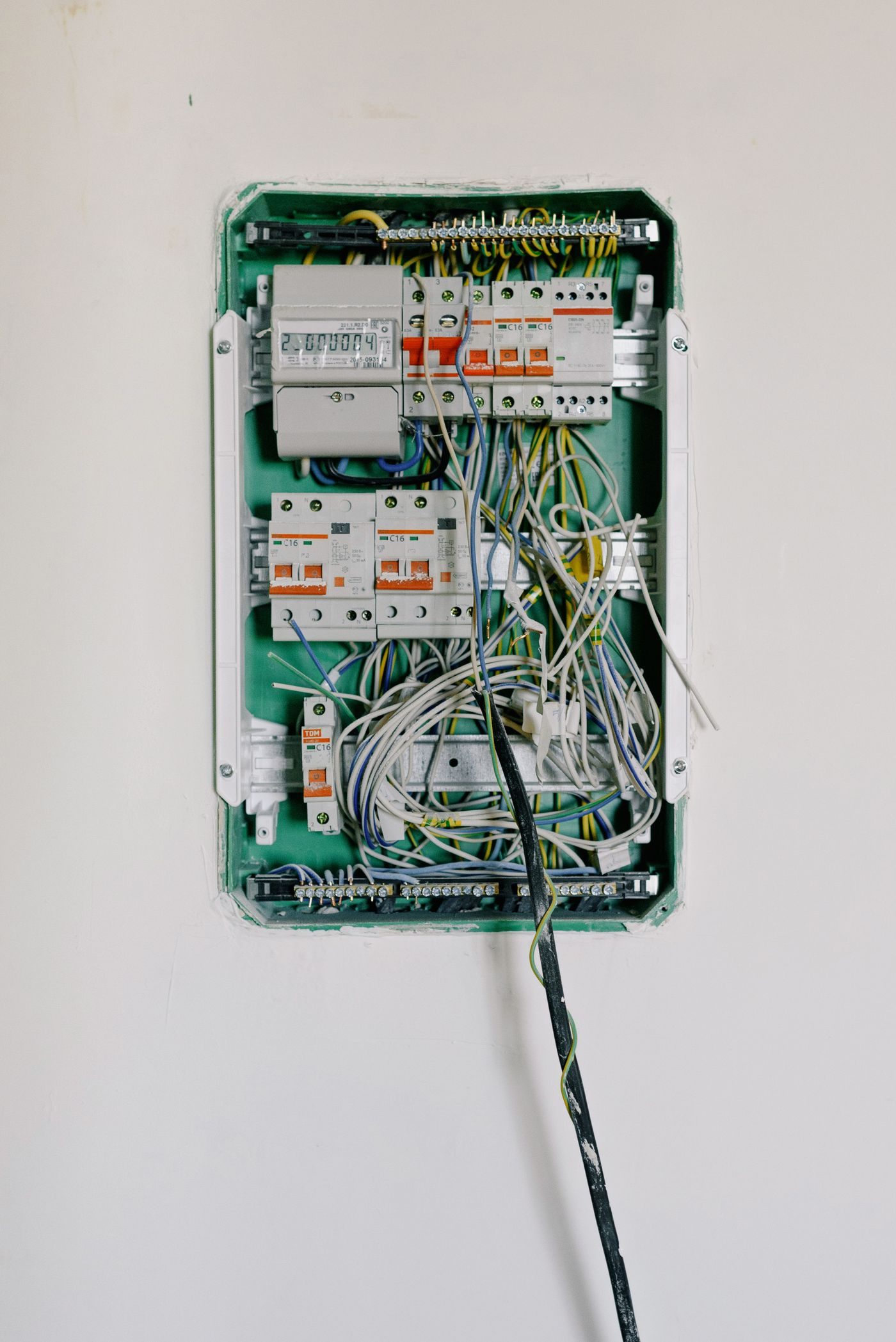
Where the rule came from
Before 2016 most house consumer units had plastic cases. Fire services across the UK reported fires that started inside the board, often at a loose connection on the main switch or the meter tails (the thick cables from the meter). Plastic cases could melt and let the fire out into the cupboard around them.
The wiring regulations were changed in response. Amendment 3 to the 17th edition (BS 7671:2008+A3:2015) required consumer units in domestic premises to have an enclosure made of non combustible material, or to sit inside a cabinet that is. That came into force for new work from January 2016. Manufacturers moved to steel cases, so in practice a new board in a London home today is metal.
The rule carried into the 18th edition and is still part of the current standard, BS 7671:2018+A4:2026. The NICEIC Amendment 4 page explains that Amendment 4 became the only current version on 15 October 2026.
Does your plastic board have to go?
No. The rule is about new and replacement boards. A plastic board fitted before 2016 is not made unsafe overnight by a later rule.
What matters is condition. When an electrician inspects an older installation, they look at the board as part of an EICR (Electrical Installation Condition Report). Each problem gets a code:
| Code | What it means | Does it fail the report? |
|---|---|---|
| C1 | Danger present, act now | Yes |
| C2 | Potentially dangerous, urgent action | Yes |
| C3 | Improvement recommended | No |
| FI | Further investigation advised | No, under Amendment 4 |
A plastic board in good order in a home is normally a C3. If the same board has scorch marks, a cracked case, loose tails or no RCD protection where it is needed, those findings get their own codes and may well be C2. Our guide to EICR codes explains each one with examples.
When it is worth changing anyway
There are good reasons to replace an older board, and the case material is rarely the main one:
- No RCD protection. Older boards may have no RCDs, or one RCD covering everything. When it trips, the whole house goes dark, lights included.
- Signs of heat. Brown marks around the main switch, a hot plastic smell, or buzzing. These are reasons to call straight away, not to plan.
- No space for new circuits. An EV charger, an electric shower or a loft conversion may need a new way that the old board cannot give.
- Rewireable fuses. Wire fuses in carriers, common in boards from decades ago. See our guide on old fuse boxes.
If none of those apply and your EICR is satisfactory, a plastic board can stay.
Hounslow, Chiswick and Brentford
The London Borough of Hounslow is a good example of why the answer depends on the home. The VOA stock of properties for 2025 shows 20.3% of its homes were built from 2000 on, one of the higher shares in our areas, alongside 28.5% built between the wars and 16.4% before 1919. Just under half (49.2%) are flats.
- Newer riverside flats in Brentford and Isleworth. Many were finished before 2016 and have plastic boards in a hallway or utility cupboard. Most are in good order. They often show up as C3 on a landlord report.
- Victorian and Edwardian houses in Chiswick and Bedford Park. Boards here have usually been changed at least once. The question is more often what is behind the board: mixed era cable and missing bonding.
- Interwar semis across Hounslow, Feltham and Isleworth. These often have a board in the cupboard under the stairs. That is the escape route, so the case material matters more than in a garage.
One local point. Hounslow is served by SSEN (Scottish and Southern Electricity Networks), not UK Power Networks, according to the Mayor’s answer to the London Assembly. The cutout (the sealed fuse before your meter) belongs to the network. If a board change needs the main fuse pulled, the network operator may need to be involved. Calling 105 puts you through to the right one for your postcode.
See our page for electricians in Hounslow and Chiswick.
What a proper replacement includes
A new metal board is the visible part. A proper job also includes:
- Testing every circuit before and after the change.
- Fixing faults that the new RCD protection exposes.
- Checking the main earth and bonding to gas and water pipes.
- A label showing what each switch controls.
- An Electrical Installation Certificate and a Building Regulations compliance certificate.
Replacing a consumer unit is notifiable under Part P. Approved Document P lists it as notifiable work. A registered competent person can self certify it, or the council’s building control must be notified first. Ask your electrician which scheme they are with and check it on the scheme’s website.
Our consumer unit replacement page covers the visit step by step. The price is a quote on survey, confirmed after a look at the job.
Quick questions
Is my plastic consumer unit illegal?
No. The rule applies to new and replacement boards. A plastic board fitted before the change can stay in use as long as it is in good condition and testing is satisfactory.
Will a landlord EICR fail because the board is plastic?
Not on that point alone. A plastic board in a home is usually given a C3 code, which means improvement recommended. C3 does not make a report unsatisfactory.
Does a metal consumer unit stop fires?
It does not stop a fault happening. It is designed to contain a fire that starts inside the board, so it is less likely to spread into the cupboard or hallway around it.
Can a metal board go in a cupboard under the stairs?
Yes, and that is common. Under the stairs is the escape route in many houses, which is one reason a case that holds a fire matters there.
Last updated 23 October 2026. Written for homes in London. Rules can change, so check the linked sources for the latest position.